The phrase may describe a place or gaming area, but it does not identify a specific venue type or replace local casino licensing.

In Australia, “pokies” is a familiar informal term for gaming machines. A “pokies parlour” can therefore suggest a physical place where those machines are available. The phrase is descriptive, however, not a single nationwide legal category that identifies a particular venue or type of licence. In practice, its meaning depends on the context in which it appears.
A casino is a physical venue operating under a licence issued by the state or territory where the property is located. Australia’s casino industry is regulated at that jurisdictional level, so the relevant licence and rules are local to each property. The phrase “parlour casino” does not replace those distinctions: it does not tell you which jurisdiction governs a venue, what licence it holds, or whether a particular business is a casino.
The word “parlour” can make a place sound like a small, dedicated room or a distinct kind of establishment. That implication should not be treated as proof of a formal venue type. If the wording appears on a sign, in a listing or in promotional material, it may simply be a label chosen to describe an area or gaming activity. The actual venue and its operating status have to be understood from more specific information than the phrase alone.
If you’re looking for a pokies parlour casino in Australia in 2026, checking the available licensing and payment details can help you assess your options. Use this list as a reference point and verify the terms that matter to you before signing up.
Thor Casino
Thor Casino lists a Curaçao licence held by Antillephone N.V. for Versus Odds B.V. Its minimum deposit is EUR 20.
SpinsUp
SpinsUp lists a Curaçao Gaming Control Board licence, OGL/2023/174/0082, held by Dama N.V.
House of Pokies
House of Pokies lists an international iGaming licence, though the jurisdiction is not named in the source. You can use PayID for payouts stated as 1–24 hours; the minimum deposit is A$30, or A$10 with PayID.
LevelUp Casino
LevelUp Casino lists a Curaçao eGaming licence, OGL/2023/174/0082, held by Dama N.V. Its minimum deposit is A$15.
Neospin
Neospin lists a Curaçao Gaming Control Board licence, OGL/2023/176/0095, held by Hollycorn N.V.
GoldenCrown
GoldenCrown lists a Curaçao Gaming Control Board licence, OGL/2023/176/0095, held by Hollycorn N.V.
WinSpirit Casino
WinSpirit Casino lists a Curaçao eGaming licence, OGL/2024/923/0383, held by Antillephone N.V. Its minimum deposit is A$30.
SkyCrown
SkyCrown lists a Tobique Gaming Commission licence. Its stated payout times are around 10–15 minutes for crypto and 1–5 days for fiat; the minimum deposit is A$30.
Uptown Pokies
Uptown Pokies is stated to have operated since 2017 and lists a Curaçao licence. Its minimum deposit is A$20.
Wild Tokyo
Wild Tokyo lists a Curaçao licence. Its stated payout times are 30–60 minutes for crypto and 1–5 days for fiat, and its minimum deposit is A$10.
Nor does the phrase, by itself, identify a particular online casino. It may appear on a website because someone has used it as a name or description, but those words do not establish that the business is a physical casino, that it holds a local venue licence, or that it is authorised to provide any service. The useful first distinction is between a physical casino property and words displayed online about something called a parlour.
Australia has casinos across all eight states and territories. A specialist review reports more than 20 full-scale casinos across the country; that is an attributed count, not a permanent definition of what qualifies as a casino or a timeless total. The number does not make “pokies parlour” an official label. A venue’s classification still depends on its own circumstances and the jurisdiction responsible for it.
For a physical visit, the wording should lead you to identify the actual property rather than infer details from a broad label. Check that the address and venue name refer to the same place, then look for information issued by the venue or the relevant jurisdiction. Those details matter because casino licences are issued locally, not through a single national casino-licensing system. A generic phrase cannot tell you which authority is responsible.
Entry has a clear national age threshold: you must be at least 18 to enter an Australian casino. That requirement concerns casino entry; the word “parlour” does not create a separate age category. If a listing uses the phrase without clearly identifying whether it refers to a casino, another kind of venue, or a particular part of a property, do not assume the label answers the entry question. Confirm the venue’s identity and applicable access information.
The distinction also helps when interpreting naming. A casino may use “pokies” informally when describing its gaming-machine offering, while a visitor may use “pokie parlour” to describe a room or venue they expect to find. Neither usage, on its own, establishes how the property is licensed or what facilities it contains. Treat the phrase as a starting description, not a substitute for the venue’s formal identity.
If you encounter “pokies parlour casino” attached to a business name, separate the words from the claims made around them. The phrase may communicate a general association with casino gaming, but it cannot verify the business’s location, its operating licence, or whether it is a physical venue at all. Those points require identifiable property and jurisdictional details. This keeps a familiar expression from being mistaken for a regulatory designation.
In short, “pokies parlour” is best understood as informal wording associated with gaming machines and, in some contexts, a physical casino setting. It does not define a uniform class of Australian venue and does not, by itself, identify or validate a particular business. To understand what a specific use means, establish whether it refers to a physical property and identify the state or territory responsible for that property.
In Australia, the term "pokies parlour" is an informal description and not a formal legal category or a specific type of venue licence.
A sign-up bonus or no-deposit bonus is a promotional claim, not proof that a service is authorised to provide online casino games to people in Australia. The wording describes an offer a website says it makes available. It does not establish who operates the service, what legal status it has in Australia, or whether the offer can be used as described.
The distinction matters because promotional language can make separate questions look like one. A page may say that a new account qualifies for a bonus, or that a bonus is available without a deposit. Those statements concern the offer’s advertised terms. They do not answer whether the operator may serve Australian customers. Nor does a polished presentation, an account-registration page or a visible balance settle that separate question.
When assessing a claim, first identify exactly what is being asserted. Is the page describing a welcome offer for new account holders, a no-deposit promotion, or a reward tied to some other activity? Does it give conditions that explain who qualifies and how the promotion is applied? If those details are absent, unclear or inconsistent across pages, the claim is difficult to assess on its own terms.
Even clear terms only help you understand what the website says it is offering. They do not confirm that the operator is authorised for Australian customers. Treating a detailed promotion as proof of local status would confuse two different kinds of evidence: one about a marketing offer, the other about regulatory authority.
A website may load for you, allow account traffic, or appear at a different web address from one you have seen before. None of those observations establishes that it is licensed to operate an online casino in Australia. Access and account functions describe what the site appears to do; they do not establish its legal standing. A changed address is not a substitute for evidence of authorisation.
Checking a bonus claim means examining the claim without adopting its sales language. Read the conditions as statements made by the operator, and look for whether they are complete, internally consistent and connected to the offer being described. If a page uses “no deposit” prominently but other text makes eligibility depend on additional steps, those details belong in the assessment. The phrase alone cannot explain the full arrangement.
You can also distinguish between material about a promotion and material about the operator. A bonus page may explain account eligibility, but that is not the same as a regulatory record. A site’s own description of its status is a claim to verify, not independent confirmation. Likewise, a third-party page repeating the promotion does not turn it into proof. Repetition can make a statement more visible without making it more reliable.
A useful check therefore has a narrow purpose: determine what the page actually promises and whether its own terms support that description. Keep that result separate from any conclusion about whether the service may legally accept Australian customers. If the available information does not resolve the latter question, the bonus claim has not resolved it either.
There is a difference between explaining how to evaluate a promotion and recommending that someone pursue it. Repeating an offer’s headline, presenting its conditions as an opportunity, or directing readers toward registration can function as promotion rather than neutral assessment. A cautious disclaimer does not change the practical effect if the surrounding text still encourages sign-up.
For that reason, a responsible explanation should not treat a no-deposit offer as a low-risk way to test a site, or a sign-up reward as a reason to open an account. Those framings turn the claimed benefit into a recommendation. The relevant point is simpler: the offer’s label says nothing by itself about whether the operator is authorised for Australia.
If you encounter a claim that appears unusually clear or generous, clarity of presentation still does not establish local authorisation. If the page is difficult to interpret, that uncertainty also does not prove the offer is false; it means the claim cannot be confidently understood from the wording available. In either case, keep the promotional statement and the operator’s Australian status as separate questions. A bonus claim can be checked as a claim, but it should not be mistaken for evidence that the service is approved for Australian customers.
The rules for online casino-style games are set at the federal level, even though physical casinos are licensed by state and territory governments. The Interactive Gambling Act 2001 makes it illegal for an operator to provide real-money online casino games to people located in Australia. The prohibition covers slots and poker as well as table games such as blackjack and roulette. A site’s Australian-facing language or a claim that it accepts local customers does not change that legal position.
The Australian Communications and Media Authority (ACMA) is responsible for enforcing the Act and monitoring compliance with federal interactive gambling laws. Its role is not to issue a local licence for online casinos. Instead, it can investigate prohibited services and take enforcement action against operators that provide them or advertise them in Australia.
This distinction matters when you encounter an online casino service described as available to Australian players. A website may load, display account functions or invite registrations; those features do not establish that its service is lawful here. Nor does the existence of a foreign licence override the Australian prohibition on providing real-money online casino games to people in Australia. The relevant issue is the nature of the service and the location of the customer, not how the operator presents itself.
ACMA may ask Australian internet service providers to block access to websites that provide prohibited interactive gambling services or advertise them in Australia. Blocking is one part of enforcement, not a licensing decision: a blocked site has not thereby been assessed as a venue, and an accessible site has not thereby been approved. ACMA reports blocking more than 1,455 illegal gambling and affiliate websites following enforcement action since November 2019.
Enforcement has also involved services leaving the market. Since ACMA began enforcing the rules in 2017, one reported figure says more than 210 illegal services have withdrawn from Australia; another says more than 190. Those figures differ, so they should not be treated as if they were the same count. They nevertheless describe the same enforcement mechanism: action may lead a service to stop operating for Australians, while separate action may restrict access to a website.
The legal focus is on what operators provide or advertise. The Act’s prohibition covers real-money online casino games, including slots, poker and table games. A label such as “play online” does not identify a separate legal category, and calling a game free does not by itself establish that an associated service is authorised. The circumstances and structure of a service matter; a promotional description alone cannot settle its status.
Legal Prohibition
The Interactive Gambling Act 2001 makes it illegal for operators to provide real-money online casino games to people located in Australia.
For you, the practical distinction is between access and legality. A page opening in a browser, an account area being visible, or a site claiming to serve Australia is not proof of federal approval. ACMA’s enforcement powers include action against prohibited services and requests to providers to block relevant websites. These measures explain why access can be affected, but they do not turn online casino play into a permitted Australian service.
If you need to understand the rule itself, consult the Interactive Gambling Act 2001 and ACMA’s information about interactive gambling. These explain the federal framework and enforcement role without relying on an operator’s own description of its status. The central point remains that real-money online casino games cannot lawfully be provided to people physically located in Australia.
A page describing free spins, chips or other casino-style credits is making a claim about an offer. The wording alone does not show that the offer exists, that its terms are accurately described, or that the service may lawfully provide it to people in Australia. A search result is a lead to assess, not evidence that a genuine or lawful promotion is available.
Separate the claims on the page. It may say that a bonus is available, that it can be used on particular games, or that it can be claimed without a payment. Each is a claim requiring evidence. Promotional language can omit conditions or make an offer sound broader than it is. A page may also remain visible after the service or offer has changed. Do not treat a prominent banner, a search listing or a repeated claim as independent confirmation.
Australian internet service providers may be required to block access to websites providing prohibited gambling services or advertising them. ACMA has taken blocking action against illegal gambling services, including domains associated with a service that has used alternate web addresses. The regulator’s enforcement information is more useful for understanding this process than promotional pages that present a changing address as a way around access problems.
Blocking affects whether a domain resolves through a particular provider; it does not, by itself, establish every detail about a service. Nor does a page loading successfully establish that the service is authorised for Australians. A site may be unavailable because a domain has been blocked, changed or become inactive. Conversely, an accessible page may still make claims that do not establish its legal status.
Addresses can change over time, which makes old links and copied instructions unreliable. A new address is not a new licence, and a redirect does not verify who operates the destination. Do not use the appearance of a working page as a regulatory test or follow a succession of addresses on the assumption that access itself confirms legitimacy.
When assessing a claim about free casino credits or spins, look for information that can be checked independently: who operates the service, what the offer actually promises, and whether the relevant regulator identifies enforcement action concerning it. Be wary when the page provides no accountable operator information, gives conflicting descriptions, or presents access instructions as proof that an offer is valid.
Keep three questions separate: whether the offer is real, whether its conditions are clear, and whether the service can lawfully provide it in Australia. Evidence for one does not answer the others. For instance, a page may display an offer without establishing that it is current; a functioning address does not establish authorisation; and a description of terms does not make a prohibited service lawful.
If you cannot verify the operator and the claims from reliable information, treat the offer as unverified rather than attempting to reach it through another address. This distinction matters because search wording can describe what someone hopes to find, but it cannot establish that a lawful offer exists.
A review can describe a physical gaming venue, discuss a website using similar wording, or combine the two. Treat those as different subjects. A detailed account of a venue’s facilities does not establish anything about an online service, and a polished website review does not show that the service has Australian approval.
Start by identifying what the review actually assessed. Does it name a physical property and describe an in-person visit, or does it discuss account access and online play? If the review shifts between these subjects without explaining the difference, its conclusions may not apply to the subject you are checking. The phrase “pokies parlour casino review” is not itself a description of a particular licensed business.
Separate observations from assertions. A reviewer may report what they saw or experienced, while claims about ownership, licensing or regulatory status require evidence beyond the reviewer’s impression. Look for the basis of each important statement: a named source, a clear explanation of what was checked, and wording that does not claim more than the evidence can show.
Pay attention to the review’s scope and timing. A review of a venue may cover its physical setting but say nothing about a separately operated website. A page may also retain old descriptions after the service or its web address has changed. If the review does not make clear what was assessed and when, treat its conclusions as limited rather than filling in the gaps yourself.
The same standard applies to favourable and critical reviews. Strong ratings, confident language and a long list of features are not substitutes for evidence. Nor does a negative account establish a regulatory finding. Ask whether the page distinguishes personal opinion from verifiable information, and whether it gives enough context for you to understand what the reviewer could actually confirm.
Australian casinos are licensed by the state or territory in which each property operates. That structure matters when a review discusses a physical casino: a licensing claim should relate to the property and its local jurisdiction, not merely to a broad statement that something is “Australian.”
Do not transfer that local licensing framework to an online service. A site may display a location, a licence reference or Australian-themed wording, but those details do not by themselves establish its status for customers in Australia. Likewise, being able to open a page is not proof of authorisation. Availability describes access at a particular time; it does not identify the regulator responsible for the service or demonstrate that the service is permitted.
Attention: A reviewer's use of the term "licensed" is not a conclusion unless the review provides a specific source and identifies the relevant jurisdiction.
When a review makes a regulatory claim, check whether it identifies the relevant property or service and the jurisdiction behind the claim. If those elements are absent, the statement is not enough to confirm status. Avoid treating a reviewer’s use of “licensed” as a conclusion unless the review explains what that term refers to and supports it with an appropriate source.
A useful review therefore has clear boundaries: what was examined, what evidence supports its claims, and which conclusions remain opinion. If those boundaries are missing, the safest reading is not to infer approval from the page’s confidence, presentation or accessibility.
Australian casino visits are tied to physical properties, not to a single national venue network. Each casino operates under a licence issued by the state or territory where it is located, so the local jurisdiction is relevant when you check a property’s status or visitor information. Location figures can also depend on how a directory defines a gambling facility. A specialist gambling-venue listing identifies Sydney as Australia’s largest gambling city and counts 11 facilities there; treat that as the listing’s classification, rather than a permanent measure of the city’s size.
The same care applies to regional counts. One specialist venue listing records three casinos across three Northern Territory cities. It identifies Alice Springs as the territory’s city with the greatest number, while listing one casino there. These are descriptions from that listing, not a guarantee that every directory uses the same definition or that a count will remain unchanged. For a visit, the property’s own address and current access details are more useful than a city-wide total.
Lasseters Casino’s listed address is 93 Barrett Drive, Alice Springs, NT 0870. On the Queensland coast, Jupiters Gold Coast Casino & Hotel is on Broadbeach Island, in the Gold Coast area. These examples place venues in different jurisdictions and show why a destination name alone may not be enough to plan a journey: check the exact property address and how it relates to your transport and accommodation plans.
Before setting out, verify the venue’s current entry conditions and opening information directly with the property. Major Australian casinos operate around the clock, but that does not remove the need to check practical details such as the entrance to use or any access restrictions that apply at the time of your visit. A valid photo ID is required for entry to all major Australian casinos, and the minimum casino-entry age is 18 nationwide. Bring identification that can establish both your identity and age; do not assume that being accompanied by another visitor changes the entry requirement.
It is also useful to separate casino access from access to other parts of a larger complex. A hotel, restaurant or entertainment area may have its own arrangements, and permission to enter one part of a property does not by itself establish permission to enter the casino. Check the relevant venue information for the specific area you plan to visit, rather than relying on a general description of the complex.
If a listing gives an address or access rule that conflicts with the property’s own information, use the property’s current details and confirm them before travelling. That approach helps you distinguish a location reference from practical entry information: a venue’s name and city tell you where to start checking, while its current directions and conditions determine how to plan the visit.
Located at 93 Barrett Drive, Alice Springs, NT 0870.
Located on Broadbeach Island, in the Gold Coast area of Queensland.
Valid photo ID is required for entry to all major casinos; minimum entry age is 18 nationwide.
A bonus is promotional language, not proof of what a service is or whether it may lawfully offer gambling to people in Australia. A page may use terms such as “welcome reward” or “member benefit” without changing the underlying service. The wording describes an inducement; it does not establish an Australian authorisation.
That distinction matters because real-money online casino games are prohibited for customers physically located in Australia under the Interactive Gambling Act 2001. The restriction concerns the service being provided, not the label attached to a promotion. Calling an offer a loyalty benefit, a parlour reward or a seasonal extra does not make an online casino service permissible.
Promotions also require caution because advertising real-money online casinos to Australian audiences is prohibited. A bonus page can be part of that advertising, even if it is presented as information or framed as a comparison. A disclaimer or commercial disclosure does not turn prohibited promotion into neutral material. The appropriate way to assess promotional language is to separate its claim from the legal status of the service behind it.
For a physical casino, a promotion may instead relate to a venue’s own terms or membership arrangements. That does not make it an online offer, and the details should be checked directly with the venue. Do not assume that a phrase used on a web page applies to a physical visit, or that a casino’s venue licence authorises an unrelated online service.
A site’s technical behaviour cannot settle the question. Being able to open a page, create an account or see it under another domain does not demonstrate that it is an Australian-licensed online casino. Those are access or account functions; they do not establish legal status. Treat statements about eligibility, rewards and payment conditions as claims to be scrutinised, not as evidence of authorisation.
The practical distinction is simple: promotional wording tells you what the advertiser wants you to notice, while regulation concerns what service is being offered and to whom. If the promotion directs you towards real-money online casino play, its attractive wording does not alter the Australian legal position. Avoid treating the existence of an advertised benefit as confirmation that the underlying offer is lawful or available to Australian customers.
When “VIP” appears alongside a casino parlour, it may refer to a venue’s higher-access area or membership category. The label alone does not tell you who can enter, whether an invitation is required, or what facilities are included. Treat it as a description to verify with the venue, not as a promise of special treatment or a particular service.
For a physical visit, separate access to the casino floor from access to other parts of the property. A hotel, restaurant or entertainment area may have different entry conditions from a gaming area. A VIP designation may also apply only to a specific room or service; it does not necessarily mean that every visitor can use it. Check the venue’s own current information before travelling, especially if your plans depend on access to a particular area.
Major Australian casinos operate around the clock, but that does not establish that every lounge, restaurant or customer service desk is open at all times. Confirm the hours and entry arrangements for the specific facility you intend to visit. You should also carry valid photo identification: it is required for entry to major Australian casinos. The minimum casino-entry age is 18 nationwide.
VIP designations may refer to higher-access areas or membership categories. Access often depends on specific invitations or membership status rather than being available to the general public, and may have different entry conditions than the main casino floor.
Do not infer a dress requirement from the word “VIP”. If attire matters to your visit, check the venue’s stated conditions rather than relying on assumptions about what the label means. Likewise, a VIP page or invitation does not by itself establish that access is available to the general public. The useful details are the exact area covered, who may enter, any access process, and the venue’s current rules. That keeps the visit decision tied to practical conditions rather than a broad promotional label.
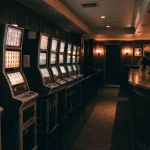
In Australian usage, “pokies” is an informal term for gaming machines. When the word is paired with “parlour”, it can suggest a dedicated room or area where such machines are grouped. In a casino, however, the relevant distinction is not the label on a room. It is whether the machines are installed at the venue and covered by its licence.
The national total is 3,308 gaming machines endorsed on venue licences and installed in Australian casinos. That figure combines two conditions: a machine must be included in a venue’s licensed allowance, and it must be installed in a casino. It is therefore a count of licensed installations, not a count of parlours, casino properties or different machine types.
This distinction matters when interpreting claims about a “pokies parlour”. The phrase alone does not establish that a venue is a separate establishment, that it has a particular number of machines, or that every machine associated with it is currently operating. Nor does the national total tell you how machines are distributed between individual casinos. It provides a broad measure of the licensed machine base across the country.
If you are assessing a physical venue, treat the wording as a description rather than a regulatory category. The machine count and the venue’s licence are separate pieces of information: the licence sets the authorised context, while installation describes what is present at the casino. A room name or informal label cannot replace either.
The figure also concerns casino installations specifically. It should not be read as a total for every gaming machine in Australia, including machines in other kinds of venues. Keeping those categories separate makes the term easier to understand without assuming that “parlour” names a distinct type of casino or licensed service.
A site may load, display account pages or accept account-related traffic without having Australian authorisation. The same applies when a service appears under a different web address. These are signs that a website can be reached or is operating online; they do not show that it is licensed to provide online casino gambling in Australia.
The legal question is not settled by a site’s branding, payment options or claims about an overseas licence. Under the Interactive Gambling Act 2001, operators cannot provide real-money online casino games to people in Australia. Casino-style games such as slots, poker and table games fall within the prohibited services when offered to customers here. A foreign licence does not replace permission under Australian law.
The Australian Communications and Media Authority (ACMA) is responsible for enforcing federal interactive gambling rules. It can investigate services that provide or advertise prohibited gambling and ask internet service providers to block access to relevant websites. As a result, an address that stops resolving, or a service that later appears at another address, is not evidence that its regulatory status has changed. Website availability can shift while the underlying legal position remains the same.
For a real-money offer, separate what the operator says about its status from what Australian law permits. Do not treat a functioning account page, a successful sign-in or a newly appearing domain as proof of Australian licensing. Those details describe access, not authorisation. The relevant context is that real-money online casino services are prohibited for operators serving people physically located in Australia, and enforcement may affect the websites used to deliver or promote them.