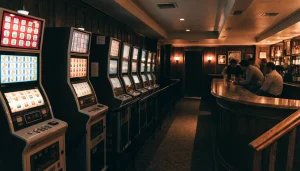
A practical guide to checking venue-specific access, interpreting payout claims and separating Geelong results from nearby searches.

A venue’s general listing is not the same as confirmation that it is open now. Opening information can change, and a page you saw earlier may not reflect a temporary closure, a change to trading hours or a restriction on access to part of the venue. Before setting out, check the venue’s own current information and, if anything is unclear, contact the venue directly.
Start with the exact venue name, rather than relying on a broad description such as “a Geelong club”. Confirm that the result refers to the place you intend to visit. Then look for operating information published by the venue itself: its current hours, notices about changes, and any details about which areas are available. A general opening time may describe the venue as a whole, not necessarily access to its gaming room. If that distinction matters to your visit, ask about it specifically.
A practical check should answer the question you actually need answered. “Is the venue open?” and “Are the pokies available?” are not interchangeable. A venue might be open while a particular area is unavailable, or its public hours might not explain when that area can be accessed. Ask whether the venue is open at the time you plan to arrive and whether the gaming room is operating then. If you need a particular service or facility, check that separately rather than inferring its availability from the venue’s general status.
Use a direct contact method when the information is incomplete, inconsistent or not clearly up to date. A phone call can resolve ambiguity that a short listing cannot: you can state the day and approximate arrival time, then ask the staff member to confirm both venue access and gaming-room availability. If you receive an answer that depends on a condition, such as a scheduled closure or a change in hours, make sure you understand what it applies to. The useful result is not merely a posted timetable; it is confirmation relevant to your planned visit.
Treat third-party directory entries and map listings as prompts for checking, not as final confirmation. They can be useful for identifying a venue or locating its official contact details, but displayed hours may not explain whether they were recently updated or whether they cover the gaming room. If different listings disagree, do not choose the one that best fits your schedule. Resolve the discrepancy with the venue before travelling.
The same approach applies if you are checking whether pokies are available early or late. A phrase such as “open now” does not establish that a particular venue is operating at that moment, and a time mentioned in an old post or directory entry is not a promise about today. Confirm the relevant day and time directly. If you cannot reach the venue, avoid treating silence or an unchanged listing as proof that the information is current.
Keep the check focused on operating status. It does not tell you how a game performs, what return setting is in use, or whether one venue offers better results than another. Those are separate questions and cannot be answered by knowing that a venue is open. Likewise, a current opening confirmation is not a guarantee that conditions will remain unchanged by the time you arrive; it is the best direct check available before setting out.
There is also a difference between a venue’s current opening information and rules about how a gaming room must be managed. A report by regionriverina.com.au describes a requirement taking effect from 1 July: venues operating more than 20 gaming machines need a dedicated responsible gambling officer on duty while those machines are running. That operational requirement does not confirm the present hours of any particular Geelong venue. Nor does seeing an opening time establish whether a venue falls within that requirement. For a visit, ask the venue about its current status; do not use a general regulatory statement as a substitute for that check.
A concise confirmation can prevent several common misunderstandings. Name the venue, give the day and intended arrival time, and ask whether the venue itself will be open and whether its gaming room will be available. If the answer is unclear, ask the staff member to distinguish the two. This is more reliable than assuming that a listing, a search result or a general description of local opening hours applies to the precise place and service you have in mind.
If you’re in Geelong exploring online pokies in 2026, this list can help you review the available operator details before choosing where to play. Check the licensing and payment information that matters to you.
Thor Casino
You can note Thor Casino’s Curaçao licence, issued by Antillephone N.V. to Versus Odds B.V., and its minimum deposit of EUR 20.
SpinsUp
You can note SpinsUp’s Curaçao Gaming Control Board licence, OGL/2023/174/0082, held by Dama N.V.
House of Pokies
You can consider House of Pokies’ stated PayID payout speed of 1–24 hours and its minimum deposit of A$30, or A$10 via PayID. Its source describes the licence as international but does not name the jurisdiction.
LevelUp Casino
You can note LevelUp Casino’s Curaçao eGaming licence, OGL/2023/174/0082, held by Dama N.V., and its minimum deposit of A$15.
Neospin
You can note Neospin’s Curaçao Gaming Control Board licence, OGL/2023/176/0095, held by Hollycorn N.V.
GoldenCrown
You can note GoldenCrown’s Curaçao Gaming Control Board licence, OGL/2023/176/0095, held by Hollycorn N.V.
WinSpirit Casino
You can note WinSpirit Casino’s Curaçao eGaming licence, OGL/2024/923/0383, held by Antillephone N.V., and its minimum deposit of A$30.
SkyCrown
You can consider SkyCrown’s stated payout speeds: around 10–15 minutes for crypto and 1–5 days for fiat. It lists a Tobique Gaming Commission licence and a minimum deposit of A$30.
Uptown Pokies
You can note that Uptown Pokies has operated since 2017, lists a Curaçao licence, and has a minimum deposit of A$20.
Wild Tokyo
You can consider Wild Tokyo’s stated payout speeds of 30–60 minutes for crypto and 1–5 days for fiat. It lists a Curaçao licence and a minimum deposit of A$10.
A claim that a pokie is “best-paying” needs a defined measure before it can be compared with anything else. The figure people often mean is return to player, or RTP: a percentage describing the share of stakes a game is designed to return across a very large number of plays. It is not a forecast of what you will receive during a visit, nor a promise that a particular player will get back that share.
There is also a configuration issue. A specialist review reports that some providers allow casinos to choose between different RTP settings for the same pokie. If that applies, the game’s name alone does not identify its return setting: the same title could have different displayed RTP figures in different venues. A comparison is meaningful only when it refers to the specific setting in use, rather than a figure associated with the game in general.
That distinction matters when you see a list or claim describing the best-paying pokies in Geelong. A title may be described using a return figure drawn from a particular configuration, but that does not establish that a venue has selected that setting. Nor does a figure attached to one location prove that the same game at another location runs on an identical configuration. Treat the title, the published figure and the venue’s setting as separate pieces of information.
RTP describes behaviour across a large volume of play. Your own result comes from a much smaller set of spins, so it can be very different from the displayed return. A short session may end in a win, a loss or a result near the amount staked; none of those outcomes shows that the stated RTP was wrong. The measure does not specify when a return will occur, how large it will be, or whether your next spin will pay.
Each spin is generated as a separate random event. Its outcome does not become more likely to pay because the previous spins lost, and a recent win does not make the following spin “due” to lose. A sequence of outcomes can look patterned to a person observing it, but the sequence does not provide a reliable method for predicting the next result. Past spins are not a running balance that the machine must repay.
This is why session stories cannot establish which pokie pays best. Someone reporting a large win describes an outcome that occurred in that session. It does not reveal the machine’s selected RTP setting, and it does not show what another player would receive. Likewise, a losing session does not prove that the game has a lower return than another title. Individual outcomes vary; the return figure is a separate measure.
When a venue or publication gives an RTP figure, check that it relates to the exact game version and configuration being discussed. Then establish whether the figure describes a setting available to the venue or the setting actually in use there. If the claim does not identify this distinction, it may be insufficient for a venue-to-venue comparison.
Attention: A pokie's title alone does not identify its return setting, as some providers allow venues to choose between different RTP configurations for the same game.
Also check that the comparison uses the same kind of measure for each game. A title’s reputation, a reported jackpot, a player’s anecdote and an RTP figure are not interchangeable evidence. A jackpot describes a particular prize outcome; an anecdote records one person’s experience. Neither substitutes for a return setting.
For someone comparing pokies around Geelong, “best-paying” is therefore not a dependable ranking on its own. A defensible comparison would need relevant, comparable information about the selected settings, and even then RTP would describe long-run performance rather than predict a visit. The number can help explain a game’s configured return profile; it cannot tell you what your next spin, or your session, will produce.
A search for online pokies around Geelong can bring up services that appear to accept Australian customers. Their availability does not mean they are authorised to provide real-money play in Australia. The key distinction is between the rules imposed on an operator and the legal position of a person who chooses to play.
Under the Interactive Gambling Act 2001, a company must not provide real-money online pokies to people in Australia unless it holds a domestic licence. No Australian licences for online casinos have been issued. In practical terms, there is no Australian-licensed online casino offering real-money pokies, whether you are in Geelong, elsewhere in Victoria or another part of the country.
That rule concerns the company providing the service. It does not make an individual player liable under the Act simply for playing on an offshore site that accepts Australian customers. Australians can legally play on such sites, but that fact should not be confused with the operator being permitted to offer the service here. A player’s position and an operator’s obligations are separate questions.
A site may load, display Australian currency or accept account registrations from people in Geelong. Those features show only that the service is accessible to you at that point. They do not establish that it has an Australian licence, because no such online-casino licences exist.
The distinction matters if you are comparing claims about real-money play, including offers described as no-deposit bonuses or games with high betting limits. A promotion or a displayed limit does not change the legal status of the service. Nor does a site’s willingness to accept a customer create Australian oversight of the operator.
This is also why descriptions such as “online casino for Geelong” can be misleading if they imply a locally licensed service. The location of the player does not convert an offshore operator into a domestic one. The same applies to searches for online pokies near Geelong Central: proximity is not a licensing category, and a website does not become a local venue because it serves people in a particular area.
The legal distinction has a direct consequence if a dispute arises. If an offshore casino refuses to pay winnings, an Australian player has no legal recourse in Australia to compel that payment. The fact that the player was not committing an offence by playing does not create a local route for recovering money or enforcing the operator’s terms.
Legal Recourse
If an offshore casino refuses to pay winnings, Australian players have no legal recourse in Australia to compel that payment.
Before treating an online offer as dependable, separate three questions: whether the service is accessible, whether the operator is authorised to provide it in Australia, and what remedy would be available if a payment dispute occurred. For real-money online casinos, the licensing answer is clear: Australia has issued no domestic licences. Accessibility alone cannot fill that gap, and player legality does not supply the protection that a local licence might otherwise imply.
These limits apply to online play, not to the legal status or operating arrangements of a physical gaming room. A search that combines Geelong with casino or pokies may refer to either kind of activity; the online rules described here concern a company supplying real-money games over the internet. They do not establish whether a land-based venue exists, is open or offers particular machines.
A venue described as being “near Geelong” may still be inconvenient for your actual trip. The useful comparison is not a broad city label but the venue’s precise address against the place you are travelling from, the destination you need to reach, and the route you plan to take. Treat “near” as a claim to check, not a measure of travel time or distance.
Start by confirming that a map result refers to a physical venue in the area you intend to visit. Read the full street address rather than relying on a name, map pin or short description. Similar place names can appear in different suburbs, and a pin may mark a car park, building entrance or nearby road rather than the public entrance. If the location is unclear, ask the venue to confirm the address and which entrance visitors should use.
Then compare the address with your route. A venue that appears close to central Geelong may sit away from your intended road or require a detour. Check the route from your starting point and also from your destination; those are different journeys, and the most direct option for one may not suit the other. If you are travelling by public transport, check the relevant stop and the remaining walk. If you are driving, check where the entrance is in relation to the road you will approach from. A map’s straight-line position alone does not show whether a route is practical.
For North Geelong, CBD or other suburb-specific results, verify the suburb as part of the address. A result labelled “Geelong” may cover a wider area than you mean when you say central Geelong or a particular neighbourhood. If your destination is near the CBD, compare the venue’s exact position with that destination rather than assuming that a city-centre label means it is close by.
Airport-related results need the same care. First identify which airport the result refers to and whether the listed place is actually at the airport, near it, or simply associated with the wider region. Do not infer a venue’s distance from an airport from a search label. Check the mapped address and route for your travel time, and confirm the intended location directly if the result is ambiguous.
Before setting out, save or write down the complete address and check it against a second map view or the venue’s own location information. This helps catch a wrong pin or a result that points to a similarly named place. These steps establish where a venue is in relation to your plans; they do not establish whether it is operating, which requires a separate check.
Planning Your Route
Verify the Address
Read the full street address and suburb from a direct venue source rather than relying on a map pin.
Map the Journey
Compare the exact position with your starting point and final destination to check for detours.
Confirm Access
Identify the specific public entrance and, if using public transport, check the nearest stop and walking distance.
If you are travelling with someone under eighteen, remember that Australian law sets eighteen as the minimum age for gambling. Location planning should not be treated as confirmation that every person in a group can enter or take part.
A venue’s gaming-room oversight is separate from its location or the number of machines it has. If you are assessing how a room is managed, focus on the procedures staff are expected to follow when a patron may be experiencing gambling harm, and whether the venue falls under the reported responsible gambling officer requirement.
A report by regionriverina.com.au describes a requirement applying from 1 July: venues operating more than 20 gaming machines must have a dedicated responsible gambling officer (RGO) on duty while those machines are running. The threshold concerns the number of machines, and the duty period is tied to machine operation. It does not, by itself, establish that a particular Geelong venue meets the threshold or that an officer is present at a particular time. You would need venue-specific confirmation for those details.
The same report describes a one-month grace period for venues to remove signage and introduce responsible gambling officers. Treat that as a reported transition arrangement, not as proof of the current arrangements at any individual venue. If you are making enquiries, ask whether the venue is covered by the RGO requirement and how it ensures the required officer is on duty when applicable. A general statement that staff are available does not answer whether a dedicated RGO is assigned.
The report also says venues will be required to maintain a gambling incident register. The register is intended to document occurrences, including behaviour that indicates a patron may be at risk of, or affected by, gambling harm. In operational terms, this provides a record of incidents rather than relying only on an informal recollection of what happened. It does not mean every concern will be visible to visitors, or that the register is a public record. You can ask how staff identify and escalate concerns, and whether incidents are recorded under the venue’s procedures, without expecting access to private patron information.
When comparing gaming-room operations, separate what can be confirmed from what cannot. A venue can explain its staffing arrangements and the process it uses to respond to concerns; a search result or promotional description cannot establish that those processes are followed in practice. Nor does an RGO or incident register indicate that one venue’s pokies are more likely to pay than another’s. These safeguards concern oversight and responses to potential harm, not game performance.
For a Geelong venue, useful questions are specific: does the machine count bring it within the reported requirement, who is responsible for the RGO duty while machines operate, and how are gambling-related incidents documented and escalated? Clear answers describe an operating process. They are more informative than a broad claim that a venue has responsible gambling measures, while still not amounting to an independent audit of its day-to-day practice.
Venues operating more than 20 gaming machines are required to have a dedicated responsible gambling officer on duty while those machines are running.
A general description such as “24-hour pokies” does not establish that a particular Geelong venue keeps its gaming room open around the clock. It may describe a broad category, reflect outdated information or refer to a different venue. Opening hours can also change, so a result that appears to describe continuous access is not a substitute for confirmation from the venue.
Check the venue’s own current information, then contact it directly if the hours are unclear. Ask specifically whether the gaming room is open at the time you plan to visit. A venue’s general trading hours do not, by themselves, tell you when its gaming machines are available. If staff provide different hours for the venue and gaming room, use the gaming-room hours for your plans.
“Open now” is also a time-sensitive description, not a guarantee that remains valid when you arrive. It can depend on when the information was updated and which part of the venue it refers to. Before travelling, confirm the intended venue and the relevant hours through a direct channel, such as its official website or phone line. If you cannot establish that the gaming room will be operating, do not treat a broad listing as confirmation.
There is a separate operational point: a venue’s opening schedule and its responsible gambling staffing requirements answer different questions. Opening hours concern when a venue or gaming room is available. The responsible gambling officer (RGO) requirement concerns oversight while machines are operating at venues that meet the relevant machine-count condition.
A report by regionriverina.com.au describes a requirement taking effect from 1 July for venues with more than 20 gaming machines to have a dedicated RGO on duty whenever those machines are operating. That staffing condition does not mean the venue is open for 24 hours, nor does a venue’s stated opening time establish that machines are running throughout that period. It is a separate operational safeguard, not a way to infer a venue’s hours.
When comparing information, keep the two checks distinct: first confirm the gaming room’s hours directly with the venue; separately, understand that RGO coverage relates to qualifying venues while their machines operate. Neither check can replace the other. A claim of round-the-clock access should be treated as venue-specific and verified before you make plans, rather than inferred from a general description or a listing that does not clearly identify the gaming room.
A Crown-related result alongside Geelong does not establish that a Crown casino or its pokies are in Geelong. Search wording can combine a venue name with a nearby city, a travel destination or a comparison someone is trying to make. Treat those as separate pieces of information until the venue’s own details confirm the location.
Melbourne and Geelong are distinct places, so a reference to Crown in a Melbourne context should not be read as proof of a Geelong venue. If you are considering a visit, check the full address and the venue’s own description rather than relying on a page title, map snippet or a phrase that joins the two names. This avoids planning around an assumed local gaming room that the wording alone cannot verify.
Search results combining "Crown", "Geelong", and "Melbourne" can be misleading. Always verify the full address to ensure the venue is actually in Geelong and not in Melbourne.
The same caution applies when a result describes a “best” pokies room or promises a maximum cash payout in Geelong. Those claims need specific, current evidence about the venue and the terms being described. A headline is not enough to establish that a particular room exists, that it has the stated machines, or that a quoted payout limit applies there. If the claim matters to your decision, ask the venue directly what it means and whether it applies to the relevant game or payment process.
Keep online and land-based claims separate. Australia has no licensed online casino. That statement concerns online casino licensing; it does not confirm or rule out the existence, location, facilities or operating conditions of any land-based venue. Conversely, a land-based venue name appearing in a result does not establish that an online casino using similar wording is licensed in Australia.
When a page blends Crown, Geelong, Melbourne and pokies into one description, identify exactly what it is claiming: a venue’s location, a gaming-room feature, a payout condition or an online service. Each is a different claim and needs its own confirmation. Do not infer a Geelong location from a Crown reference, or infer online licensing from a physical venue name. That distinction is more useful than treating several place and brand names in one line as a single, verified fact.
A claim that a club has “the best pokies” in central Geelong is not a comparison unless it explains what is being compared and how the conclusion was reached. A club name alongside words such as “popular”, “large” or “top” does not establish the number or type of machines, the conditions of access, or whether the claim is current. Treat those descriptions as unverified until you can tie them to a specific venue and supporting information.
Start by checking that the claim refers to the club you mean. Similar names, abbreviated listings and copied descriptions can make two places look like one. Look for a direct venue source, then check whether the details are specific enough to answer your question. If a page ranks clubs but gives no comparison method or evidence, the ranking is an opinion, not a measurable result. Search placement is not proof of quality.
For a local comparison, define your own criteria before relying on promotional language. You might want to know whether a particular club has a gaming room, what facilities it offers, or what its policies are. Ask the venue directly about details that matter to your visit, and distinguish a clear answer from a general description. Do not infer that one club has better outcomes for players from its location, reputation or the wording of an advertisement.
Claims about self-exclusion need the same care. Ask the venue what process it recognises and what steps you would need to take; a general statement that a club supports self-exclusion does not explain how it works in practice. If you are seeking help to stop gambling, use a support service rather than treating a venue’s marketing as guidance.
There is also a difference between a stated policy and evidence of how incidents are recorded. A report published by regionriverina.com.au says venues are to keep a gambling incident register that records occurrences, including signs that a patron may be at risk of gambling harm. That report does not, by itself, establish how a particular Geelong club applies the requirement. For a venue-level claim, seek information from the club or the relevant regulator rather than assuming that a broad statement proves local practice.
The useful test is simple: can you identify the venue, the exact claim, its basis and who confirms it? If not, treat it as a lead for a direct question, not as a reliable comparison.
The word “Parkes” can change what a result refers to. It may indicate a different intended location, form part of a venue or business name, or have been added by mistake. A result that combines Parkes with Geelong is not, by itself, evidence that a particular venue is in either place.
Before relying on a result, check the full address and locality shown on the venue’s own information. Compare that with the place you actually mean, rather than assuming that the words in a heading or snippet describe the venue’s location accurately. If the address is incomplete or the locality is unclear, contact the venue and ask which physical site the information concerns. This resolves the place-name ambiguity; it does not establish anything about a venue’s gaming-room facilities.
Keep the location question separate from planning a journey around Geelong. First identify the intended place and the venue’s exact address. Only then can you decide whether the result is relevant to your plans. A listing that mentions both names without a clear address should be treated as unresolved, not as proof of a Geelong venue in Parkes.
The same care applies when comparing pages that use phrases such as “best pokies” alongside place names. Those words do not confirm that a venue exists at the stated location or that the information relates to the site you intend to visit. Confirm the venue’s identity and locality directly before acting on the listing.
If you are considering gambling in Australia, the legal age is 18. That age rule does not resolve where a venue is located, so keep the eligibility check distinct from confirming the place. When the locality remains uncertain, do not infer it from a search result alone.
A reference to Newcastle alongside Geelong does not identify a single local area or establish that a venue is in either city. Treat the places as separate until you have confirmed which one the information concerns. Likewise, a phrase about cashless pokies does not tell you how a particular venue handles payments. A bank-transfer service and a gaming machine are separate systems; one does not prove that the other accepts cashless play.
PayID is an alias layer connected to Australia’s New Payments Platform (NPP). It lets a sender address a bank transfer using an email address, mobile number or ABN instead of entering account details. The transfer still moves through the banking system: PayID is not a card, wallet balance or feature built into a pokie. The NPP is supported by major banks and uses end-to-end encryption, but those properties describe the payment infrastructure, not the recipient or the purpose of a payment.
That distinction matters if you encounter PayID mentioned in connection with gambling. Its availability cannot establish that a service is licensed, fair or suitable. A specialist review reports that some Australian banks, including the major four, may block PayID transfers to gambling merchants they recognise. A transfer being blocked is a bank decision; it does not confirm anything about the status of the merchant.
For a land-based venue, do not infer that PayID can be used at a machine, or that a venue offers cashless play, from the payment method’s general availability. Those are separate claims about venue facilities and payment arrangements. For an online payment, PayID merely identifies a way to initiate a bank transfer; it does not change the legal position of the service receiving it. Check what a payment description actually refers to before treating it as evidence about a venue or a pokie.
Yes, Australian players can legally play on offshore sites that accept them, but companies cannot legally offer real-money online pokies to Australians without a domestic licence, and no Australian online casino licences have been issued. If an offshore casino refuses to pay, you have no legal recourse in Australia.
It is the amount you must bet before bonus winnings can be withdrawn, usually calculated as a multiplier. For example, a $500 bonus with a 40x requirement means $20,000 in bets; if the requirement applies to a $500 deposit plus a $500 bonus at 35x, it means $35,000 in bets.
Each spin is an independent random event determined by a Random Number Generator. However, some providers let casinos choose between different RTP settings for the same game, so the return percentage may vary between casinos.